
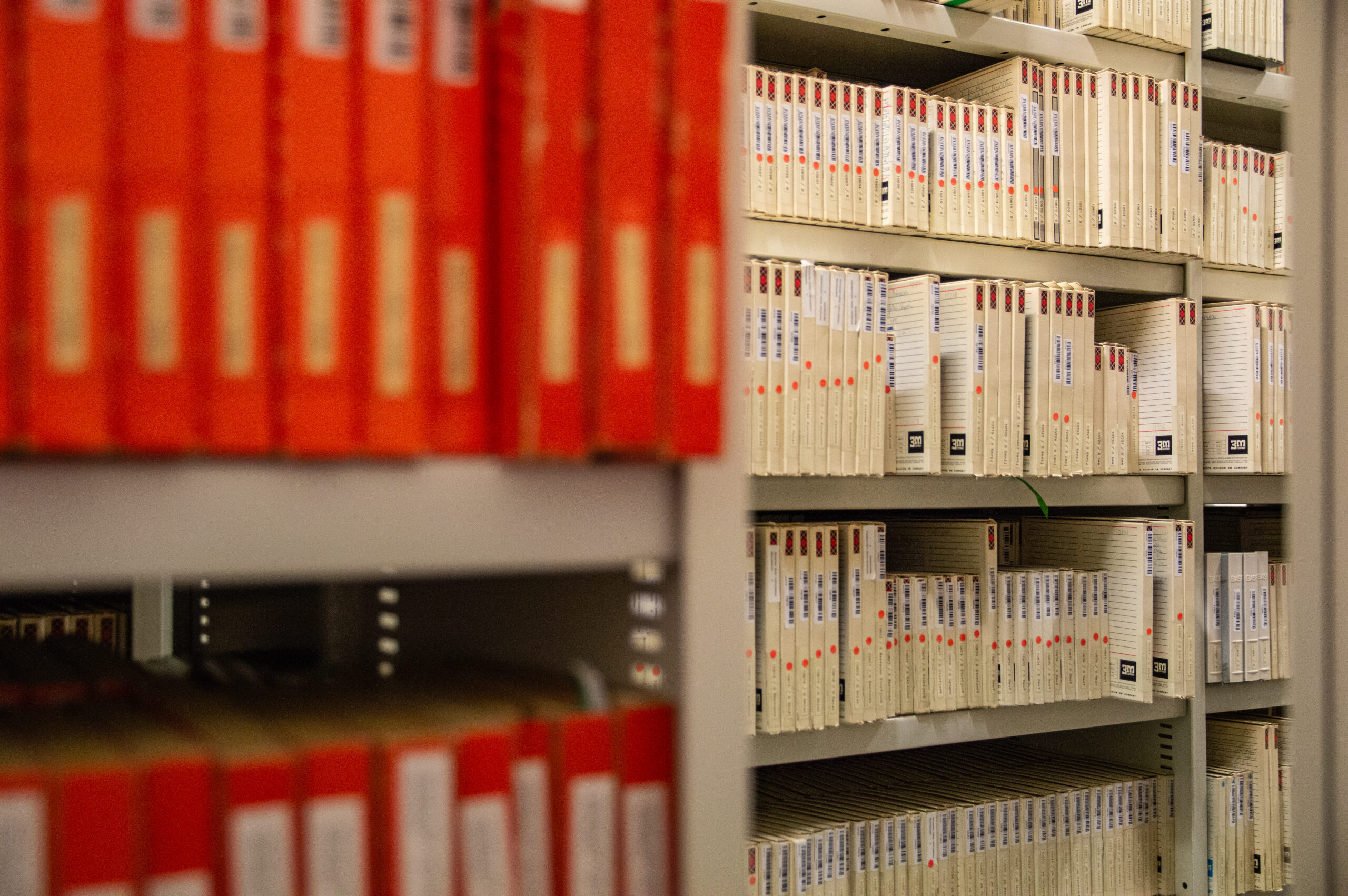
Tape Archive of the Finnish Language
The Tape Archive of the Finnish Language (SKNA) is an extensive and comprehensive collection of recordings of colloquial and standard Finnish spoken in Finland and the nearby regions. The SKNA archive contains approximately 24,000 hours of recordings, primarily featuring Finnish dialects. The material on regional dialects is supplemented by recordings of languages closely related to Finnish, other languages spoken in the nearby regions and recordings of standard Finnish.
The archive’s material has been used for hundreds of linguistic studies and theses. In addition to linguists, the material is used by researchers of culture and students of the field, hobbyists interested in dialects and local history, and the descendants of the recorded individuals. Information on the recordings is available in the collection database. The SKNA archive was established in 1959 by Pertti Virtaranta, the recently appointed professor of Finnish language at the University of Helsinki.
The recording of dialects was defined as the goal of the Tape Archive of the Finnish Language, as linguists felt that old folk dialects were rapidly disappearing. Thus, the purpose of the recordings was to preserve a snapshot of colloquial Finnish at the turn of the century. The original goal was to collect an average of 30 hours of recordings from every Finnish-language municipality. This general goal was met by the end of the 1970s with a total of nearly 15,000 hours of dialect recordings. The dialect recordings were primarily made in summer. The recordings were made by the archive’s personnel, volunteers, trained researchers in the field, as well as students, who received a stipend from the archive. The interviewees, or informants, were selected by asking around in the local municipalities. The preferred types of informants were older people who had been born in the municipality and had lived there their whole lives, and who used the local dialect as their natural colloquial language.
The recordings primarily consist of informal speech and accounts of subjects familiar to the informants. The purpose of SKNA’s archive was to represent the diversity of the language in its entirety. In addition to the regionally representative and diverse dialect archive, the archive was supplemented with spoken material in standard Finnish. This formed the second part of the collection, recordings of significant cultural history value. It contains various kinds of public presentations, lectures, and interviews with subjects such as literary authors. The collection was later further supplemented by more modern colloquial Finnish: From the 1960s onwards, the archive began recording the colloquial spoken language of specific cities, and added the spoken language material collected by Heikki Paunonen’s research group in Helsinki in the 1970s and 1990s. The variations of the Finnish language are given historical context by the supplementary samples of languages closely related to Finnish, which have been recorded by Finnish researchers in the field. The collection features samples from closely related languages such as Karelian, Estonian, Livonian, as well as more remotely related languages such as the Sámi languages, Komi, Mari and Hungarian. The recordings consist of a variety of content, including narration, text read out loud, and songs.