
- Home
- /
- The National Register
- /
- The archival materials and collections of the Finland-Swedish literary modernists
The archival materials and collections of the Finland-Swedish literary modernists
Year of induction: 2024
Custodian: Society of Swedish Literature in Finland, Åbo Akademi University Library,
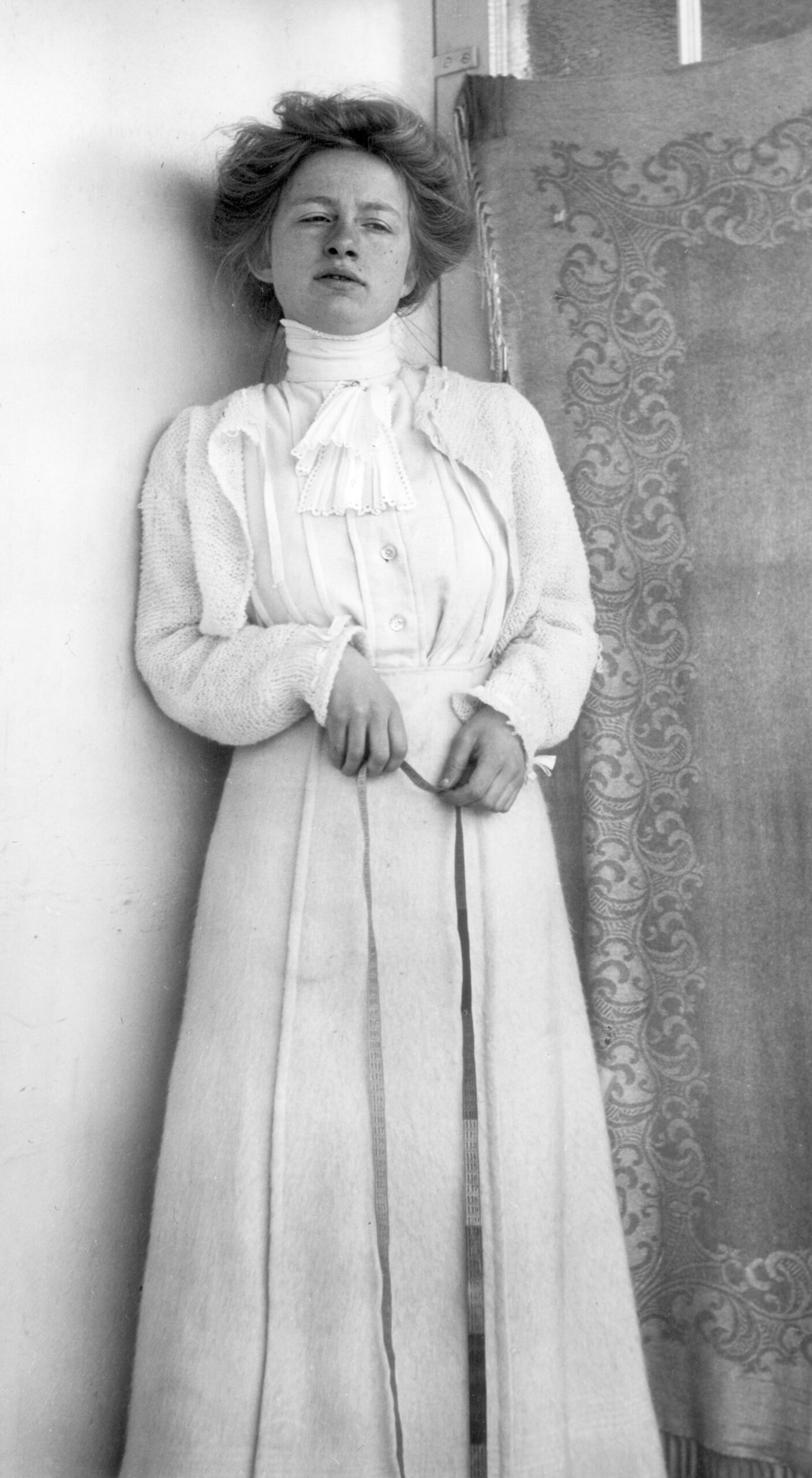
Defining exactly which authors count as Finland-Swedish modernists may vary, especially because the authors themselves did not necessarily define themselves as modernists, at least not at first. Modernism is not a unified movement but has flowed in different directions and been shaped over the years by the authors themselves as well as by literary researchers. The authors who form the core of Finland-Swedish modernism include Edith Södergran (1892–1923), Hagar Olsson (1893–1978), Elmer Diktonius (1896–1961), Gunnar Björling (1887–1960), Rabbe Enckell (1903–1974) and Henry Parland (1908–1930). Edith Södergran came to attract the greatest attention, and she continues to be the most extensively researched of these authors.
Some of the personal archives of these modernists can be found in the Society of Swedish Literature in Finland’s (SLS) archives and others, in the case of Olsson and Björling, are held in the archives of Åbo Akademi University Library (ÅAB). In addition to manuscripts and other material directly related to the authors’ literary production, these personal archives contain correspondence, notes, diaries, photographs, personal files and newspaper clippings. The Finland-Swedish literary modernists are of great importance not only for the development of Swedish-language modern literature in Finland, but also for the emergence and development of modernism in the Finnish language and in Sweden. Literary historian Kai Laitinen has listed six characteristics, or common features, that distinguish Finland-Swedish modernism: free rhythm, no rhymes, new imagery, new vocabulary, a broader range of motifs and new structure. What is called modernist literature can include all of these features at the same time or only some of them.
The Finland-Swedish modernists were pioneering in the Nordic region, paving the way for the modernist literary movement in both prose and poetry. Nordic modernism is considered to have begun in 1916, when Edith Södergran and Hagar Olsson debuted with the poetry collection Dikter and the novel Lars Thorman och döden respectively. This was long before modernism established itself in the Finnish language and in Sweden, which only happened around the 1930s. From the 1920s, the literary modernists interacted closely with each other, also across language barriers. This made Finland-Swedish modernists both bridge builders and inspirers. Not only did they know and socialise with other authors in the Nordic countries, but they also actively wrote about and highlighted other modernist authors in various contexts.
In Finland, modernists collaborated during short periods under various magazines, of which the bilingual Ultra (1922) and the entirely Swedish-language Quosego (1928–1929) are the most famous. All archival material concerning these authors is of interest, including the letters they sent to others, especially authors and artists. The letters show how modernist conversations took place, who belonged to different literary circles, how the authors supported, or sometimes opposed, each other, and how they viewed art and literature as well as relationships with each other or the world at large. Large quantities of letters may be found in different places but they are also housed in our archives and in other private or public archives in the Nordic countries. Thus, the material also includes such correspondence of these modernists that for various reasons is found in other personal archives or collections of SLS and ÅAB.
The personal archives of modernists are also closely linked to the archives involving people close to them. This applies above all to people who have been active in preserving, describing and participating in modernist circles. In addition to more extensive correspondence with the modernists, many of these archives contain manuscripts and notes concerning modernists and modernism. With this in mind, relevant parts of the archives of the author Oscar Parland and the artist Sven Grönvall are included in the collection. The former was the brother of Henry Parland, in addition to which he preserved and posthumously published his brother’s writings. In turn, Sven Grönvall was a childhood and close friend of Henry Parland, who died young. The archive of Olof Enckell, an author, critic and literature professor, is also included. Olof Enckell was the brother of Rabbe Enckell and both he and his brother studied, explained and theorised about modernism as a phenomenon. The archive of the translator Cid Erik Tallqvist is also included because he was not only a literary friend of several modernists but also editor-in-chief of the magazine Quosego. These are examples of other personal archives closely connected to modernism and modernist authors.