
Archive of the Skolt Sámi village
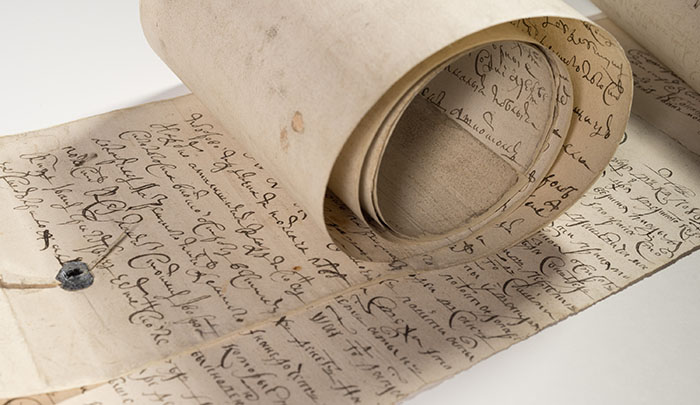
The archive of the Skolt Sámi village is a collection of Indigenous historical documents that illustrates how, over the past centuries, administrative decisions have been interpreted as safeguarding community rights. The archive contains documents such as decrees (gramoty) issued by the Russian Emperor, the Imperial Duma, and later, the Governing Senate, confirming the rights of the Skolt Sámi to fishing and reindeer-herding areas.
The archive originates from the Skolt Sámi village of Suonikylä (Skolt Sámi: Suõ’nnjel ), which was located in the Petsamo region. Its preservation involved a practice developed by the community: the documents were joined together with bone glue into a scroll approximately nine metres long, which was stored in a carved wooden case. Only three men, each representing different families, knew where it was hidden.
The oldest document preserved in the archive dates from 1601, and the most recent from 1775. Although some of the oldest documents, dating from the late 16th century, have been lost, the surviving material shows that the Skolt Sámi used written documents to secure their land and water rights. The documents played a key role in the community’s livelihood, especially with regard to fishing and reindeer herding.
When World War II broke out in 1939, the Skolt Sámi were evacuated from Petsamo, and the archive was moved to safety. It was initially placed in the National Archives in Helsinki. In 2012, the archive was returned to the Skolt Sámi community, who transferred it to the Sámi Archive for preservation. The Sámi Archive is a branch of the National Archives that was established in Inari in the same year.
UNESCO has classified the Skolt Sámi language as endangered. The archive of the Skolt Sámi village has cultural significance not only for the Skolt Sámi community but also for Indigenous peoples and communities more broadly.